
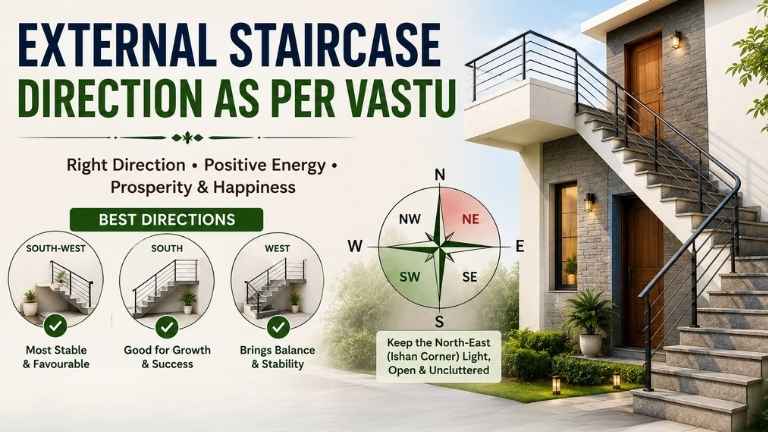
An external staircase is an important structural element in many residential and commercial buildings. Whether it provides access to the first floor, terrace, office, or rental unit, its location can significantly influence the overall design and functionality of a property. According to Vastu Shastra, the direction and placement of an external staircase are also believed to affect the flow of energy within a building.
Many homeowners planning a new construction or renovation search for the External Staircase Direction as per Vastu to ensure their property follows traditional Vastu principles. While architecture focuses on safety and usability, Vastu emphasizes balancing natural energies to create a harmonious living environment.
In this guide, we’ll discuss the ideal external staircase direction as per Vastu, the directions to avoid, common mistakes, practical remedies, and tips for residential and commercial buildings.
CONTACT US NOW FOR A VASTU EXPERT
What Is an External Staircase?
An external staircase is a staircase built outside the main building structure. It is commonly used for:
- Independent floor access
- Duplex homes
- Rental properties
- Terrace access
- Commercial buildings
- Apartments
- Guest rooms
Unlike internal staircases, external staircases are directly exposed to the surrounding environment, making their placement even more significant in Vastu planning.
Why Staircase Direction Matters in Vastu
In Vastu Shastra, every direction represents a specific element and type of energy. A staircase is considered a heavy structure that adds weight to a particular section of the property.
The correct staircase direction helps:
- Maintain energy balance
- Support stability
- Promote financial growth
- Enhance family harmony
- Improve overall positivity
An improperly placed staircase may create directional imbalance according to traditional Vastu beliefs.
Best External Staircase Direction as per Vastu
South-West Direction
The South-West is widely considered the best direction for an external staircase.
According to Vastu:
- It supports stability.
- It balances the heavier structure of the staircase.
- It strengthens the property’s energy.
- It is suitable for both residential and commercial buildings.
Many Vastu experts recommend this direction whenever possible.
South Direction
The South is another favorable location.
An external staircase in this direction is generally considered acceptable when designed properly.
Benefits may include:
- Better structural balance
- Improved energy distribution
- Practical access for upper floors
West Direction
The West direction is also regarded as a suitable location for an external staircase.
This placement is commonly used in homes, offices, and commercial buildings.
Directions to Avoid for External Staircases
North-East Direction
The North-East (Ishan Kon) is one of the most sensitive zones in Vastu.
Since this direction is associated with:
- Spirituality
- Wisdom
- Positive energy
- Water element
Placing a heavy staircase here is generally discouraged.
Many Vastu practitioners believe that a North-East staircase may restrict the flow of positive energy.
East Direction
The East direction is associated with the rising sun and fresh energy.
A heavy staircase in this area may reduce natural light and obstruct positive vibrations.
North Direction
The North represents prosperity and opportunities.
Large external staircases in this direction are generally avoided unless supported by the overall property layout.
Ideal Staircase Movement
Apart from direction, the movement of the staircase is also considered important.
According to Vastu, external staircases should preferably rise:
- Clockwise
- From North to South
- From East to West
These patterns are traditionally considered favorable for maintaining balance and positive energy.
External Staircase Direction as per Vastu for Homes
For residential properties, staircase planning should complement the overall house layout.
Recommended locations include:
- South-West
- South
- West
Avoid:
- North-East
- Center of the house
- Brahmasthan
Homeowners should also ensure sufficient lighting and cleanliness around the staircase.
External Staircase Direction as per Vastu for Commercial Buildings
Commercial properties often require external staircases for customer or employee access.
Suitable locations include:
- South-West
- West
- South
Proper placement may help maintain a balanced and welcoming environment.
External Staircase Direction as per Vastu for Rental Properties
Independent external staircases are common in rental houses.
When constructing a staircase for upper-floor tenants:
- Prefer South-West.
- Avoid the North-East.
- Maintain sufficient open space.
- Ensure safe construction.
This helps preserve both functionality and Vastu balance.
Design Tips for External Staircases
Besides direction, the design also plays an important role.
Keep the Staircase Strong and Stable
The staircase should be structurally sound and well-maintained.
Avoid damaged steps or unstable railings.
Use Proper Lighting
Good lighting improves safety and creates a positive atmosphere.
Natural lighting is especially beneficial during the daytime.
Maintain Cleanliness
Avoid storing:
- Junk items
- Broken furniture
- Construction materials
- Waste
under or around the staircase.
A clean staircase enhances the appearance of the property and supports positive energy.
Choose Suitable Colors
Light and neutral shades generally work well for external staircases.
Common choices include:
- White
- Beige
- Light grey
- Cream
- Natural stone finishes
Common Vastu Mistakes
Many homeowners unknowingly make staircase-related mistakes.
Some of the most common include:
Staircase in the North-East
This is among the most frequently discussed Vastu defects.
Staircase in the Center of the Property
The center, or Brahmasthan, should ideally remain open.
Heavy construction in this area is generally avoided.
Broken or Damaged Staircases
Cracked steps or broken railings may affect both safety and the overall appearance of the property.
Clutter Below the Staircase
Using the staircase area for excessive storage can make the space feel congested.
External Staircase Vastu Remedies
If relocating the staircase is not possible, certain practical remedies are often suggested.
Keep the Area Bright
Ensure the staircase receives adequate natural or artificial lighting.
Maintain Clean Surroundings
Regular cleaning helps create a positive atmosphere.
Avoid Heavy Storage
Do not place unnecessary heavy items under the staircase.
Use Light Colors
Soft shades can reduce the visual heaviness of the structure.
Improve Landscaping
Plants and greenery around the staircase can make the entrance more welcoming.
Can an Existing Staircase Be Corrected?
Many homeowners ask whether an existing staircase can be corrected without reconstruction.
In many cases:
- Minor design improvements are possible.
- Better lighting can enhance the space.
- Decorative landscaping can improve the appearance.
- A professional Vastu consultation may provide property-specific recommendations.
Every property has a unique layout, so a complete assessment is often beneficial.
Benefits of Proper External Staircase Placement
When the External Staircase Direction as per Vastu is planned correctly, many people believe it supports:
- Better energy flow
- Improved family harmony
- Financial stability
- Comfortable living
- Positive surroundings
- Efficient space utilization
While Vastu is a traditional architectural system, many homeowners appreciate its focus on balance and thoughtful planning.
Frequently Asked Questions
Which is the best external staircase direction as per Vastu?
The South-West direction is generally considered the most favorable, followed by the South and West.
Can I build an external staircase in the North-East?
Traditional Vastu guidelines usually discourage staircases in the North-East because it is considered a spiritually significant and light zone.
Which way should an external staircase rise?
A clockwise ascent is commonly recommended in Vastu.
Can Vastu remedies improve an existing staircase?
Many homeowners implement practical remedies such as better lighting, cleanliness, and design improvements when relocation is not possible.
Final Thoughts
Choosing the right External Staircase Direction as per Vastu is an important consideration when designing a home, office, or commercial property. According to traditional Vastu principles, the South-West, South, and West directions are generally preferred because they complement the heavy nature of a staircase and support overall energy balance.
If your property already has an external staircase in a less favorable direction, practical improvements such as proper lighting, cleanliness, thoughtful landscaping, and professional Vastu guidance can help create a more harmonious environment. While Vastu should be balanced with modern engineering, safety standards, and architectural design, many homeowners find value in incorporating these traditional principles into their construction plans.
ALSO READ
Best astrologer in Kolkata for gemstone
Business Astrology Consultation in Kolkata
Best Astrologer in Raghunathpur, Kolkata
Best Astrologer in Chinar Park, Kolkata