
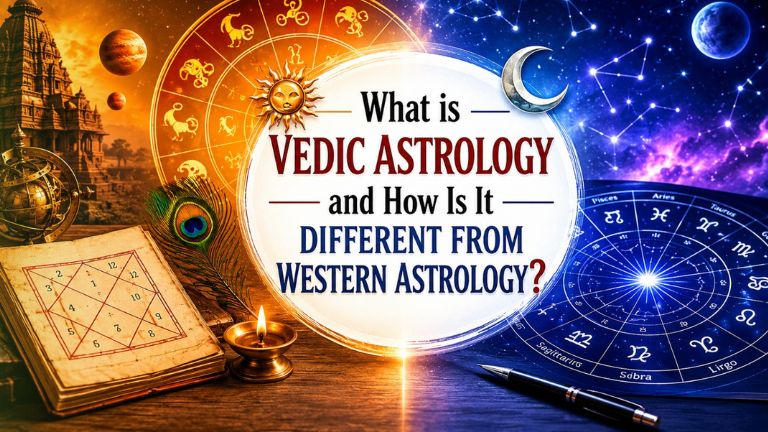
Astrology has been practiced for thousands of years as a way to understand human nature, life events, relationships, and spiritual growth. Among the many forms of astrology practiced worldwide, Vedic Astrology and Western Astrology are the two most popular systems. While both study the influence of celestial bodies on human life, they differ greatly in calculations, methods, zodiac systems, and interpretation styles.
People often wonder: What is Vedic Astrology? and How is it different from Western Astrology? Understanding these differences can help individuals choose the system that resonates most with their beliefs and life goals.
In this article, we will explain Vedic Astrology in detail, explore its origins, and compare it with Western Astrology from an SEO-friendly and beginner-friendly perspective.
What is Vedic Astrology?
Vedic Astrology, also known as Jyotish Shastra, is an ancient Indian system of astrology that originated more than 5,000 years ago. The word “Jyotish” means “science of light,” and it is deeply connected with the Vedas, the sacred scriptures of India.
Vedic Astrology studies the positions of planets, stars, and constellations at the time of a person’s birth to predict life events, personality traits, career, marriage, health, finances, and spiritual progress.
Unlike modern horoscope-based astrology, Vedic Astrology is highly mathematical and detailed. It uses planetary movements and precise calculations to create a birth chart (Kundli).
Main Elements of Vedic Astrology
Some important components of Vedic Astrology include:
- Birth Chart or Kundli
- Zodiac Signs (Rashis)
- Nakshatras (Lunar Constellations)
- Planetary Periods (Mahadasha)
- Houses (Bhavas)
- Planetary Transits (Gochar)
- Yogas and Doshas
These elements work together to provide detailed predictions and guidance for life.
Origin and History of Vedic Astrology
Vedic Astrology has its roots in ancient India and is considered a spiritual science. It was developed by great sages and scholars who studied celestial patterns and their impact on human life.
The foundation of Vedic Astrology is found in the Rig Veda, one of the oldest sacred texts in the world. Over time, Indian astrologers refined this knowledge into a structured predictive system.
Many people believe Vedic Astrology is not just about predicting the future but also about helping individuals achieve balance, karma correction, and spiritual awareness.
What is Western Astrology?
Western Astrology is the astrology system most commonly practiced in Europe and North America. It originated in ancient Babylon and later evolved through Greek and Roman influences.
Western Astrology mainly focuses on personality analysis, psychological behavior, emotional tendencies, and self-awareness. It became especially popular through newspaper horoscopes and zodiac sign readings.
This system uses the Tropical Zodiac, which is based on the seasons rather than the actual positions of constellations.
Major Differences Between Vedic Astrology and Western Astrology
Although both systems analyze planetary positions, there are several major differences between them.
1. Zodiac System Used
The biggest difference lies in the zodiac calculation method.
Vedic Astrology Uses the Sidereal Zodiac
Vedic Astrology follows the Sidereal Zodiac, which is based on the actual positions of constellations in the sky.
Western Astrology Uses the Tropical Zodiac
Western Astrology uses the Tropical Zodiac, which is based on the Sun’s position relative to Earth’s seasons.
Because of this difference, a person’s zodiac sign may change between the two systems.
For example:
- A person who is an Aries in Western Astrology may be a Pisces in Vedic Astrology.
This happens due to the approximately 23–24 degree shift known as the Ayanamsa.
2. Focus and Purpose
Vedic Astrology Focuses on Life Predictions
Vedic Astrology is mainly predictive. It examines:
- Marriage timing
- Career success
- Financial growth
- Health issues
- Childbirth
- Spiritual development
It also suggests remedies such as mantras, gemstones, donations, and rituals.
Western Astrology Focuses on Psychology
Western Astrology focuses more on:
- Personality traits
- Emotional behavior
- Mental patterns
- Relationships
- Self-discovery
It is often considered more psychological than predictive.
3. Importance of the Moon Sign
In Vedic Astrology, the Moon Sign plays a major role because the Moon represents the mind and emotions.
In Western Astrology, more emphasis is given to the Sun Sign, which reflects identity and personality.
That is why newspaper horoscopes are generally based on Sun signs in Western Astrology.
4. Nakshatras vs Zodiac Signs
One unique feature of Vedic Astrology is the use of Nakshatras.
CONTACT US FOR Astrology Services in Kolkata
What Are Nakshatras?
Nakshatras are 27 lunar constellations that provide deeper insight into personality, destiny, and compatibility.
Western Astrology generally does not use Nakshatras and relies mainly on the 12 zodiac signs.
5. Predictive Accuracy
Many astrologers believe Vedic Astrology offers more accurate predictions because it uses:
- Planetary periods (Dashas)
- Detailed divisional charts
- Precise planetary calculations
- Lunar constellations
Western Astrology is often considered better for personality analysis and emotional understanding.
6. Planetary Period System (Dasha)
Vedic Astrology uses a unique timing system called Mahadasha.
This system helps astrologers predict:
- Good periods
- Challenging phases
- Marriage timing
- Career growth
- Financial opportunities
Western Astrology generally relies more on planetary transits and progressions rather than Dashas.
7. Remedies and Spiritual Solutions
Vedic Astrology provides spiritual remedies to reduce negative planetary effects.
Common remedies include:
- Gemstones
- Mantras
- Yantras
- Charity
- Fasting
- Pujas
Western Astrology usually focuses less on spiritual remedies and more on personal awareness and self-improvement.
Similarities Between Vedic and Western Astrology
Despite their differences, both systems share several similarities.
Both Systems:
- Study planetary positions
- Use zodiac signs
- Analyze birth charts
- Help understand personality
- Explore relationships and compatibility
- Examine life patterns
Both systems aim to guide individuals toward better decision-making and self-understanding.
Which Astrology System Is More Accurate?
There is no universal answer to this question. Accuracy often depends on:
- The astrologer’s knowledge
- The calculation method used
- The purpose of consultation
Vedic Astrology May Be Better For:
- Predictive analysis
- Marriage timing
- Career guidance
- Financial predictions
- Spiritual growth
Western Astrology May Be Better For:
- Personality analysis
- Emotional understanding
- Psychological insight
- Relationship counseling
Many modern astrologers combine both systems to gain a more complete understanding of a person’s life.
Why Vedic Astrology Is Becoming Popular Worldwide
In recent years, Vedic Astrology has gained international popularity because of its depth and predictive capabilities.
People from different countries now consult Vedic astrologers for:
- Career guidance
- Relationship advice
- Health concerns
- Spiritual healing
- Business decisions
The rise of online astrology consultations and digital Kundli software has also increased awareness about Vedic Astrology globally.
Benefits of Vedic Astrology
Here are some major benefits of Vedic Astrology:
1. Better Self-Understanding
It helps people understand their strengths, weaknesses, and life purpose.
2. Career Guidance
Vedic Astrology can suggest suitable professions and career opportunities.
3. Relationship Compatibility
Kundli matching is widely used for marriage compatibility analysis.
4. Spiritual Growth
It encourages inner awareness and karmic understanding.
5. Timing of Important Events
It helps identify favorable and unfavorable periods in life.
Common Misconceptions About Vedic Astrology
Myth 1: Astrology Predicts Everything
Astrology provides guidance and probabilities, not fixed destiny.
Myth 2: Astrology Is Superstition
Vedic Astrology involves mathematical calculations and centuries of observation.
Myth 3: Remedies Change Fate Completely
Remedies are meant to reduce challenges and improve positivity, not magically erase all problems.
Conclusion
Vedic Astrology and Western Astrology are both fascinating systems that offer valuable insights into human life. However, they differ significantly in zodiac calculations, interpretation methods, predictive techniques, and spiritual approach.
Vedic Astrology is deeply rooted in ancient Indian wisdom and focuses heavily on karma, destiny, and precise predictions. Western Astrology, on the other hand, emphasizes personality, psychology, and emotional awareness.
Choosing between the two depends on what you seek—future predictions, spiritual guidance, or self-understanding. Many people today explore both systems to gain a balanced perspective on life and personal growth.
Whether you believe in astrology for spiritual reasons or personal insight, understanding these two systems can open the door to deeper self-awareness and life clarity.
ALSO READ
Best Vastu Consultant for Home and Business in Baguiati
Best Astrologer in Hatiara, Kolkata
Best Muhurat to Start a Business in 2026
Best Astrologer in Raghunathpur Kolkata